Monday, 1 December 2014

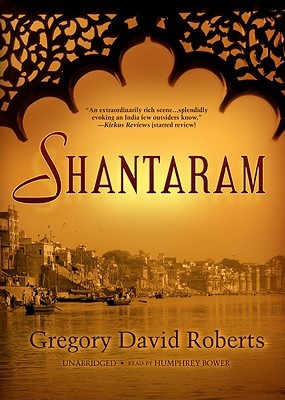
Shantaram : Gregory David Roberts

  In 1980, a former herion addict escapes Australian prison, and flees to Bombay. Having fallen in love with the country upon landing he learns to regain the aspects of his life he formerly lost. The character development within the book, is one which shows a great diversity of perspectives, from slums to five-star hotels, Gregory David Robert writes in beautiful detail of his characters, thoughts, opinions and his meaning behind continuing on; the meaning of life. 
  Although the book is an extremely heavy read, it forms a lot of quotable phrases, which makes one rethink everything relevant to your life. After "Lin-Baba"'s 10 years in Bombay, he returns to Australia as captive, having learnt the heart, life and love of the world. This novel could be considered an auto-biography, and is a high recommendation of mine.


Anzac Exhchange

Sarge I think I'm buggered,
I'm bitten on me back,
a bloody snakes bin crawlin' thru the grass.
So call the Medic quick,
to give me arm a prick,
and take away the pain until I pass.
Yer mate the Bombardier,
can have me 'ish' of beer,
I won't be drinkin' Fosters when I go.
I've wrote me mum a note,
and I've put it in me pack,
she's livin' down near Kunga-munga-mo.
So tell me Aussie mates,
you'ze Kiwi bloody skates,
have caused the death of one of Anzac's finest.
And when I pass away,
don't put me in the clay,
the bloody dingo's here are rife as goats.
What's that you bloody say,
the choppers on its way,
it won't be here in time to save this Digger.
The Doc he said it's what?
Now how did that get there?
A tear tab from a beer can caused this wound?
Well, the pain will pass away,
and I'll fight another day,
but PLEEZE you'ze Kiwi's keep this to yourselves!
Mike Subritzky 1986


I chose this because i thought it was quite interesting with all the slang words is interesting and not something we have looked at in class as most of the poems are of a serious nature and none of them are exciting or funny. Also the poem is written in 1986 so it was quite late for a war poem.

"Divergent" Review

The book Divergent is about a 16 year old girl named Beatrice "Tris" Prior. When 16, she has to make a decision to choose 1 of 5 factions- Abnegation, Erudite, Amity, Candor and Dauntless. When Tris takes the test to find out which of the 5 she belongs to, she finds out she is Divergent, which means that she has an open mind and that she can't train herself to act in one specific way of life. She chooses Dauntless, which is for the brave. She must go through hard training and ends up falling for Four, one of her instructor, while maintaing her secret identity of being a Divergent.

The writing is really easy for the reader, because it uses very straight forward language. This book is very entertaining, because it is not a hard book to read, and is easy to understand. This is a book that I would definitely recommend to readers that like a dystopian and science fiction.

Stormbreaker review

Readability: 8/10
Content was relatively easy to understand, although there were some adjectives that I did not really get during the time I was reading this book, since I was only 10 years old when I first read this book.

Entertainment: 9/10
A great read. Contains many scenes of action, suspense, and conflict. There are conflicts between the protagonists themselves, or between the protagonists and the antagonists. As you read, it just really wants to make you read on, so you can know what is going to happen next.


Thought-provoking: 7/10

Especially the ending, which is a hook for us to wonder and be curious about what is going to happen in the following books in the series, as the first book of the many books in this series comes to a close.

O Captain! My Captain! - Walt Whitman

O CAPTAIN! MY CAPTAIN! 
Walt Whitman (1819-1892)
O Captain! my Captain! our fearful trip is done,
The ship has weathered every rack, the prize we sought is won,
The port is near, the bells I hear, the people all exulting,
While follow eyes the steady keel, the vessel grim and daring;
   But O heart! heart! heart!
      O the bleeding drops of red,
         Where on the deck my Captain lies,
            Fallen cold and dead.
O Captain! my Captain! rise up and hear the bells;
Rise up--for you the flag is flung--for you the bugle trills,
For you bouquets and ribboned wreaths--for you the shores
     a-crowding,
For you they call, the swaying mass, their eager faces turning;
   Here Captain! dear father!
      This arm beneath your head!
         It is some dream that on the deck
            You've fallen cold and dead.
My captain does not answer, his lips are pale and still,
My father does not feel my arm, he has no pulse nor will,
The ship is anchored safe and sound, its voyage closed and done,
From fearful trip the victor ship comes in with object won;
   Exult, O shores, and ring O bells!
      But I, with mournful tread,
         Walk the deck my Captain lies,
            Fallen cold and dead

“O Captain! My Captain!” is a poem by Walt Whitman, included in his famous collection Leaves of Grass. The poem was written in 1865, at the end of the American Civil War, after the surrender of the Confederate States and the assassination of Abraham Lincoln. The “captain” in this famous poem refers to Abraham Lincoln, who captains the United States, represented by the “ship”, and the whole poem discusses how Abraham Lincoln died right when the United States had won the war, “O Captain! my Captain! rise up and hear the bells; /Rise up--for you the flag is flung--for you the bugle trills… It is some dream that on the deck/You've fallen cold and dead”. The poem
I found this poem by looking through significant wars in the modern English speaking world. I came across the American Civil War, and thought that this war would be a good basis to start searching for poems. When searching through a website dedicated to the poetry of the American Civil War, I came across a name I had heard many times, Walt Whitman. Upon clicking the link, I found that I was familiar with the poem. As a result of anchoring, I ended up choosing this poem.
I really enjoy this poem’s rhythm, and how the poem’s rhythm gives the poem energy, reflecting the joy of the United States after they had won the Civil War. The rhythm is almost danceable, with sharp stresses and rapid changes. I feel the stark contrast between the death of the "captain" and the scene unfolding before them on the shore is an excellent use of contrast, making each aspect seem much more important. The contrast makes the death seem much more impactful, when juxtaposed with the celebration. I also feel that the indentation of the poem’s lines helps represent the tonal changes in the content and atmosphere in the poem. It is almost if the indentations of the poem build up the theme and prepare the reader for the final line, which always explicitly states that the captain has “fallen cold and dead”.

HOSPITAL BLAST-WALL : Bernie Bruen

As we have all been reading Black Swan Green, we should all know that the falkland war was mentioned in an earlier part of the book. This poem written during the time of the war, comes out as an engaging read, for those of us who are interested in the current english material we're reading. The poet Bernie Bruen, describes the environment of a hot, muddy island, through using verbs, like slipping and sweating, rather than direct adjectives. This unique method of description and building atmosphere makes the poem more interesting to read, as well as a lot more lively, due to the use of verbs.


"Softly, now, and mind your noise.
Don't disturb the wounded boys - sleeping.
Though they dribble down your neck,
Put the sandbags on the deck - weeping.

Use the shingle from the shore.
Bring a couple hundred more - dripping.
Roundly, with a turn belay!
Detonator's on delay - slipping.

Time is short, so lift and haul;
Got to thicken up this wall - stacking.
"Beat the Clock to Beat the Bomb!"
Such a fitting axiom - cracking!

Strip to trousers, boots and belt.
Push yourself until you melt - sweating.
Heave 'em up; no time to lose,
Only minutes on the fuze setting.

Hacked it! - with a bag to spare,
Finest bulwark anywhere - lasting.
Let the sucker detonate;
No way it can penetrate - blasting."

Requiem for the Croppies - Review


Requiem for the Croppies

The pockets of our greatcoats full of barley...

No kitchens on the run, no striking camp...

We moved quick and sudden in our own country.

The priest lay behind ditches with the tramp.

A people hardly marching... on the hike...

We found new tactics happening each day:

We'd cut through reins and rider with the pike

And stampede cattle into infantry,

Then retreat through hedges where cavalry must be thrown.

Until... on Vinegar Hill... the final conclave.

Terraced thousands died, shaking scythes at cannon.

The hillside blushed, soaked in our broken wave.

They buried us without shroud or coffin

And in August... the barley grew up out of our grave.


Seamus Heaney

---

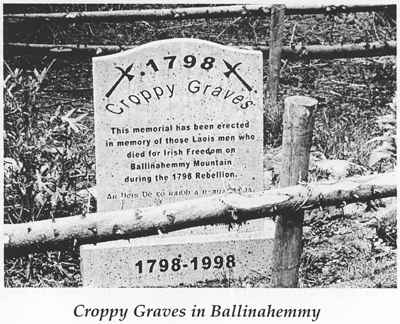
Requiem for the Croppies is a poem written by Seamus Heaney about the Irish Republican Army (IRA). In 1919 to 1921, the IRA began a campaign against British Rule in Ireland which was known as the Irish War of Independence.

This reason in which I have chosen this poem is because not only did I find it an interesting read, but also because it was about something I never knew before. It was nice to learn about a historical event while researching about the poem.


War Poetry - The Lonely Hill

The Lonely Hill

Wild grow the poppies in Tunisian vale
Gracing the green of a fertile land
And here comes "Peace" to lay her veil
On the hill of the foes last stand. .
Out of the Plain reared the lonely hill
Like a breast bared to the sky
Its slopes clasped the fallen ever still
And its bosom echoed the swallow's cry. .
Small sanctuary of a fallen dream
Last bastion to Enfidaville
Your crumbled fort is a desolate scene
Where all but the winds are still. .
The winds will rise and the tall grass bend
To ripple like waves of the sea
And time will take the scars to mend
On the lonely hill of the free.
- RA Harris

The poem is describing a soldier sitting on top of a lonely hill in Tunisia waiting to be rescued. As he sits in his shelter, his mind wanders back home and freedom. I chose this poem from World War 2 because it made me realize how lonely the war must have been, when you leave your family and loved ones to serve the country and fulfill your duty. He referred to his dreams as fallen and I feel sympathy for the soldiers. We all have experienced loneliness, but not on such a massive scale. 

Poem on WW2

The Glory of the Guns

When the Battle Cry is spoken, 
And the Voice of War is heard, 
The soldiers of the Allies, 
To battlefields do move. 

The enemy is silent, 
As if waiting for the sun, 
Then they hear that awesome sound, 
The booming of the Guns. 

They shudder in their trenches 
Within a gnawing fear, 
Of knowing the Battery 
Of 1-6-1 is here. 

The shells come whilstling all around, 
And wreck and break and knock things down, 
Creating havoc among the lines 
And all that it surrounds. 

The enemy has broken 
In torn and tired dismay, 
Those so inclined 
Get down on knees and pray. 

The Allies are victorious, 
The enemy is on the run, 
Once again they have been beaten 
By the Glory of the Guns.

- Gunner MR Duncan


General Quarters WW2 Poem

GENERAL QUARTERS

General quarters, general quarters, 
All hands man your battle station! 
Sunday morning, December the 7th,
As war confronted our nation.

We soon found out it wasn’t a drill 
But instead it was war for real.
As you watch the death of friends and shipmates, 
It’s more anger than fear you feel.

Japanese warplanes came flying in low, 
As I took aim with my gun sight.
From the deck of a ship anchored at Pearl 
Damaged, though crew still eager to fight.

I saw the face of a pilot, who crashed,
Surrounded by black smoke and fire.
Some of my bullets must have found their mark.
For his death was but my desire!

Two thousand, three hundred and twenty-three killed, 
In a battle less than two hours.
With the heart of our Pacific fleet gone, 
Japan had flexed their naval powers.

The bombing and strafing of ships and troops 
Caused our congress to declare full war. 
Where many a man laid down his life 
Fighting for flag, country and more.

-Tom Zart

I chose this poem because of the rhyming scheme, and also the story that it tells. This poem was written during the WW2, of the Japanese against the Chinese. It talks about the scenery of the war and the feelings from one of the soldiers. 
Short Story Review

The Lady or the Tiger? 
Frank Stockton

Readability: 8/10
Entertainment: 6/10
Thought-provoking: 8/10

          The Lady or the Tiger is a short story written in the late 1800s by an American writer named Frank Stockton.  The story is set in an olden time, where a barbaric king formulated a system of punishment for criminals. The trial would take place in the King's arena, and the slaughter– or celebration, would commence. There are two doors within the amphitheatre, one of which contains the fiercest tiger, and the other holds a lady. The criminal would then face his/her fate by opening either door, depending on their destiny. If they were to be guilty, the tiger would come out and devour him, but if he was accused, the lady would emerge and they would have to get married. One day the king found out that his daughter was having an affair with a commoner, the king decided to punish him by putting him in the arena. On the day of trial, the commoner gestures towards the royal maiden to ask for help, the maiden points to the right door, and the story ends there. The main point of the story is to provoke the readers thoughts on the two major themes of the story– jealousy and love. Was the maiden so full of jealousy that she fed him to the tiger? Or did she love him too much to watch him die and sacrificed him for another woman? The answer is ambiguous.

          The writing style of this story is somewhat challenging for readers our age, as there are elaborate sentence structures and unfamiliar contexts and vocabulary. But the style is evidently not modern and the language used is very proper. I gave entertainment an above average score as I did find the story intriguing and definitely thought provoking. Overall the story is an interesting read so I highly recommend it!

'Extracts From Adam's Diary' Review

My story was an extract from Adam’s Diary by Mark Twain. The extract started when Eve is created. The story was told in first personal perspective, containing the inside thoughts of Adam, and how their daily life was back then. It is a very humorous story - how Adam and Eve named things that they didn't know, making up words and identifying them. I would say that it is obviously easy to understand the plot and the language of this story. Adam's Diary is a quite entertaining story to read as unexpected things that happened in life back then was surprisingly more hilarious than I thought it would be. For example, before Adam ate the apple, Eve covered herself with leaves, but Adam thought it’s stupid so he pull the leaves off, but when he bit the apple, he felt ashamed of himself. But this story doesn’t actually let you think when you read it.


Readability: 10/10
Entertaining: 8/10
Thoughts: 3/10

TOTAL: 21/30

The story teller


This story is about a pack of impatient children on a train demanding to be entertained by their aunt. Because of her old fashion story the children quickly grow disinterested, and this is all witnessed by a witty bachelor who tell the children another story. Instead of telling the children an old fashioned story where good things only happen to good people he alters the ending slightly, which appals the aunt but is adored by the children. This story was quite an easy read as the language was quite simple so I gave it a nine out of ten for readability. Although this story had a witty ending I didn’t enjoy it that much, seeing that it was slightly dragged out with a bit too much unnecessary detail. Therefor I gave it a six out of ten for entertainment. Seeing as the bachelor was obviously trying to irk the aunt and give the children a refreshing view on storytelling I gave this a seven out of ten for thought provoking.

1.http://en.wikipedia.org/wiki/Saki 2.http://windling.typepad.com/blog/2013/02/iraglass-on-storytelling.html


US Civil War Poem by Walt Witman

TO THE GARDEN, THE WORLD.

To THE garden, the world, anew ascending,
Potent mates, daughters, sons, preluding,
The love, the life of their bodies, meaning and being,
Curious, here behold my resurrection, after slumber;
The revolving cycles, in their wide sweep, having 

         brought me again,

Amorous, mature—all beautiful to me—all wondrous;
My limbs, and the quivering fire that ever plays through 

         them, for reasons, most wondrous; 

Existing, I peer and penetrate still,
Content with the present—content with the past,
By my side, or back of me, Eve following,
Or in front, and I following her just the same.

Walt Witman


The poem is written during the US Civil war which celebrates physical love between men and women. It is one of the poems in the war poem anthology Leaves f Grass. I chose this poem because it reveals various aspects of the war from a different perspective. It also reveals the poet's appreciation of beauty and excellence, which hugely contrasts the destruction and horror of war.


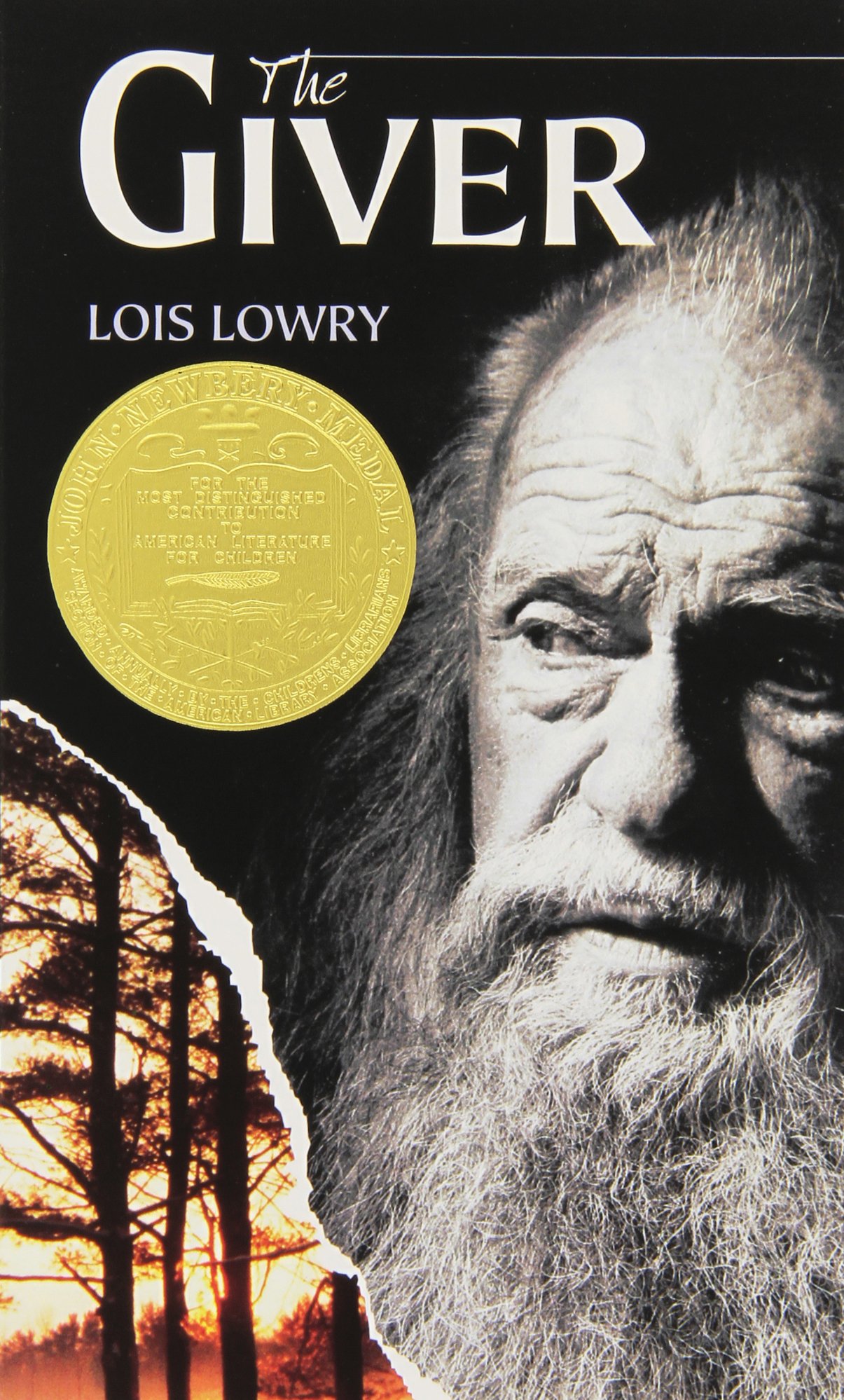
The Giver Review

Genre: Science Fiction
Author: Lois Lowry

The Giver portrays a society first presented as utopian, but gradually appeared to be more dystopian. The protagonist, Jonas, was assigned the receiver of memories when he was assigned his job at 13, which led him to a treacherous journey.

The words were pretty straightforward, pretty easy to read. As for entertainment, I find the book pretty interesting and there were a lot of descriptions of small details. There were quite a few climaxes throughout the novel.  I find this book really thought-provoking and it really got me thinking, particularly the problems associated with communism and capitalism, even though I did find the thought that a society can never be perfect upsetting.

Readability: 9/10
Entertainment: 7/10
Thought-provoking: 9/10
Overall: 25 / 30

                                   
                                       Lois Lowry

'Little Women' Review

Author: Louisa May Alcott (1832-1888)

A vivid depiction of life in the 19th century. The four sisters: Meg, Jo, Beth and Amy March came from an indigent family where the girls had to work part-time jobs and struggle through the hardships in life at a young age in order to make a living. Throughout the book the sisters experience multiple encounters with those who are better off, causing them to be in fits of jealous piques. Eventually, the girls realize and start to appreciate the most precious thing they have in life: family.

The themes of the story are ‘Domestic Life’ and ‘Maturation’ as it talks about the struggle of the girls between familial duty and personal growth.


Readability: 9/10
Entertainment: 8/10
Thought-Provoking: 8/10
Overall: 25/30