'Love, Rosie', directed by Christian Ditter, is a British romantic comedy-drama film produced in 2014. The main actors in the movie are Rosie Dunne and Alex Stewart played by Lily Collins and Sam Clafin. It is based on a novel titled 'Where Rainbows End' by Cecelia Ahem. This movie sets in Boston, Massachusetts.
It describes the friendship between Alex and Rosie since they young. It starts with Alex going to the school dance with Bethany and Rosie goes with Greg. Soon afterwards, Rosie receives a letter feeling her that she has been accepted into Boston University. She then goes to the doctors saying that she has been feeling nauseous lately and took a pregnancy test that turns out to be positive. She hide the fact that she got accepted into Boston University from Alex while Alex told her that he got into Harvard as she didn't want him to stay for her. After Alex moves to America, things start to change as they struggle to maintain their friendship over the years.
In my opinion, I really liked how they started the movie with the Alex's wedding with another woman that is not Rosie where Rosie gives a speech and then it switches to 12 years earlier where Rosie and Alex are celebrating her 18th birthday. I enjoy the flashback and makes me wonder about the ending of this movie.
Tuesday, 31 March 2015

Sunday, 29 March 2015
"The Legend of 1900" Review

https://blogger.googleusercontent.com/img/b/R29vZ2xl/AVvXsEjwhZz5qUHEXFIDbUgTODxmnBb-Ps1gGS-1wfk7kefOXdvjaitnSAVjviV-nrOqFKwQJ8sM1bW7ASrNKuK4SKEn4hKNYp9BYoL_PQiOe5tGhNJJjWkioetrLyR4eKN49oA38OaCmDM92ewH/s1600/ley.jpg
“The Legend of 1900”, directed by Giuseppe Tornatore, is an Italian drama film produced in 1998. The main actors in the film are Tim Roth, Pruitt Taylor Vince, and Mélanie Thierry. It is filmed in the form of a series of flashbacks of a trumpeter (or in medias res), Max Tooney, who meets a pianist aboard the SS Virginian (an ocean-liner that crosses the Atlantic), where Max worked as a member of the ship’s orchestra.
The film revolves around the story of this pianist, narrated in Max’s point of view. He talks about how the pianist was born and raised on theVirginian, found as a baby in a box labeled “T. D. Lemon” by a coal-man from the boiler room; the coal-man, Danny, names the baby “Danny Boodman T.D. Lemon 1900”, and raises 1900 until a tragic accident happens and 1900 is left to fend for himself on the Virginian. Turns out, he has a talent in music, especially that for a piano, and eventually becomes famous for the music he played. However, he had never left the vessel, as the outside world was too big for him to comprehend.
Personally, the film was really enrapturing for me because of the songs that are played throughout the movie. Each soundtrack would accurately depict the situation 1900 and Max were in, and is it awe-inspiring to see how they are able to tell a moving tale using different types of music (ranging from classical—“Silent Night”—to jazz—a duel will Jelly Roll Morton). To put it in the simplest way possible, this movie is somewhat like a Disney musical without lyrics in their theme songs, and with a much more complicated, non-cliché, story-line.
The cat in the hat
Then our mother came in
And she said to us two,
“Did you have any fun?
Tell me. What did you do?”
And Sally and I did not
know what to say.
Should we tell her
The things that went on
there that day?
Well... what would YOU do
If your mother asked you?
Look at me!
Look at me!
Look at me NOW!
It is fun to have fun
But you have
to know how.
The cat in the hat! One of the great Dr.Seuss's most distinguished poems and by far one of my favourite poems. This poem definitely classifies as one of my top 5 favourite poems, because as a child I could relate to having to make some crazy stuff up just to entertain my little brother and I. In the end though these memories that I created by finding delight in my imagination are the ones that I am most fond of.
|
Sunday, 22 March 2015
A Piece of Chinglish
I have seen many Chinglish sayings, but one that I have seen was "If you have any trouble, feel free to hang your employes."
This quote is actually meant to say if you have any trouble, feel free to ask the employes. They mixed up ask and hang so it makes a completely different sentence. This is one of my favorite Chinglish sentences because it makes me laugh and also it would be really funny if people got scared over this kind of sign.
Chinglish

I've chosen this piece of poor translation as it's actually local to Hong Kong, more commonly seen around Lantau Island, where I live. These bins actually refer to how the bins are both for recyclable trash and non-recyclable trash. 'cum' is actually a Latin word, used when describing things as together, it literally means 'together with' or 'along side'. Although this translation does technically make sense, these latin bins choice of wording isn't the best, as we've moved on from the old usage of this word, and found a new meaning for it entirely. Although recently it seems as though the poor translation of these bins has been noticed by officials, as many of them now have a green sticker replacing the 'cum' with a forward slash to indicate that the bins are for both types of trash. They even took to replace one of the characters in Chinese, and although I do know that the character "及" means and, it does lead me to wonder whether it also has a double meaning. I've still seen the occasional untampered bin around, which continues to remind me of the poor choice of diction Hong Kong made long ago.

Whatif by Shel Silverstein
Last night, while I lay thinking here,
some Whatifs crawled inside my ear
and pranced and partied all night long
and sang their same old Whatif song:
Whatif I'm dumb in school?
Whatif they've closed the swimming pool?
Whatif I get beat up?
Whatif there's poison in my cup?
Whatif I start to cry?
Whatif I get sick and die?
Whatif I flunk that test?
Whatif green hair grows on my chest?
Whatif nobody likes me?
Whatif a bolt of lightning strikes me?
Whatif I don't grow talle?
Whatif my head starts getting smaller?
Whatif the fish won't bite?
Whatif the wind tears up my kite?
Whatif they start a war?
Whatif my parents get divorced?
Whatif the bus is late?
Whatif my teeth don't grow in straight?
Whatif I tear my pants?
Whatif I never learn to dance?
Everything seems well, and then
the nighttime Whatifs strike again!
I really enjoyed this poem because not only does it bring back childhood memories, it lists out the things that could go wrong. It is a very simple poem but it translate and thinks of a thing called the "Whatif" when it is actually What If. I really love the ways that Shel Silverstein thinks of what could go wrong in his lifetime and put it all into one poem. It is filled with one word repetition and it keeps going on for the majority of the poem.
some Whatifs crawled inside my ear
and pranced and partied all night long
and sang their same old Whatif song:
Whatif I'm dumb in school?
Whatif they've closed the swimming pool?
Whatif I get beat up?
Whatif there's poison in my cup?
Whatif I start to cry?
Whatif I get sick and die?
Whatif I flunk that test?
Whatif green hair grows on my chest?
Whatif nobody likes me?
Whatif a bolt of lightning strikes me?
Whatif I don't grow talle?
Whatif my head starts getting smaller?
Whatif the fish won't bite?
Whatif the wind tears up my kite?
Whatif they start a war?
Whatif my parents get divorced?
Whatif the bus is late?
Whatif my teeth don't grow in straight?
Whatif I tear my pants?
Whatif I never learn to dance?
Everything seems well, and then
the nighttime Whatifs strike again!
I really enjoyed this poem because not only does it bring back childhood memories, it lists out the things that could go wrong. It is a very simple poem but it translate and thinks of a thing called the "Whatif" when it is actually What If. I really love the ways that Shel Silverstein thinks of what could go wrong in his lifetime and put it all into one poem. It is filled with one word repetition and it keeps going on for the majority of the poem.
Saturday, 21 March 2015
Chinglish
The piece of Chinglish I've witnessed before is: "pork pork pork and pork".
I was with my mom in a cantonese restaurant and flipping through the bilingual menu when a certain dish caught my eye. It was a pork dish (obviously) and after reading the Chinese name and feeling more and more satisfied, I read the english title. It seemed like such a strange mistake to make, as even though the Chinese name itself included the word pork a few times, it seemed to only make sense that the owner himself or herself would be able to catch this mistake. That was what I found funny about it, the fact that even though the the owner may not have been able to read English, they surely must have noticed the strange repetition. However, the dish was quite delicious, so that evens out with the name mistake. All is well.
I was with my mom in a cantonese restaurant and flipping through the bilingual menu when a certain dish caught my eye. It was a pork dish (obviously) and after reading the Chinese name and feeling more and more satisfied, I read the english title. It seemed like such a strange mistake to make, as even though the Chinese name itself included the word pork a few times, it seemed to only make sense that the owner himself or herself would be able to catch this mistake. That was what I found funny about it, the fact that even though the the owner may not have been able to read English, they surely must have noticed the strange repetition. However, the dish was quite delicious, so that evens out with the name mistake. All is well.
Touched by An Angel by Maya Angelou
Touched by An Angel
We, unaccustomed to courage
exiles from delight
live coiled in shells of loneliness
until love leaves its high holy temple
and comes into our sight
to liberate us into life.
Love arrives
and in its train come ecstasies
old memories of pleasure
ancient histories of pain.
Yet if we are bold,
love strikes away the chains of fear
from our souls.
We are weaned from our timidity
In the flush of love's light
we dare be brave
And suddenly we see
that love costs all we are
and will ever be.
Yet it is only love
which sets us free.
Maya Angelou
I personally find this to be quite a beautiful piece. It showcases a certain sad truth but sheds a beautiful light on it. The vocabulary is also quite pleasant. Unlike typical cliche love poems, this poem talks of the other aspects of love that aren't as pretty, such as pain, fear, and loneliness. This sets the poem aside from cliche love poems, and adds a deeper and more realistic touch to it. I especially like the last sentence, as I feel that it is not only beautiful, but also a wonderful truth.
"Yet it is only love/ which sets us free."
A Boat Beneath a Sunny Sky By Lewis Carroll
A Boat Beneath a Sunny Sky
A BOAT beneath a sunny sky,
Lingering onward dreamily
In an evening of July —
Children three that nestle near,
Eager eye and willing ear,
Pleased a simple tale to hear —
Long has paled that sunny sky:
Echoes fade and memories die:
Autumn frosts have slain July.
Still she haunts me, phantomwise,
Alice moving under skies
Never seen by waking eyes.
Children yet, the tale to hear,
Eager eye and willing ear,
Lovingly shall nestle near.
In a Wonderland they lie,
Dreaming as the days go by,
Dreaming as the summers die:
Ever drifting down the stream —
Lingering in the golden gleam —
Life, what is it but a dream?
I really enjoy this poem, because it has amazing imagery and it's very dreamy. It makes me feel like that there are no worries in life, just floating happily in the sky.
Favourite Piece Of Chinglish
One of my favourite piece of Chinglish is when Chinese people say "cock" instead of coke. It's quite common since Chinese people can't pronounce coke properly. They don't know that the "e" at the end makes the "o" sound like the "o" in "note", and just saids something that sounds like "cock". It's really funny and it's really common, making it one of my favourite piece of Chinglish.

http://www.wrjphoto.com/wp-content/uploads/2013/12/chinglish-cock-zero.jpg
My Favorite Piece of Chinglish
"Aim straight and keep toilet seat fresh"
I saw this hilarious Chinglish phrase in action in a restroom stall in the Taiwanese airport. The original Chinese sign post original meaning wanted to notify the toilet users that they should it on the toilet seat rather than squat over it to prevent the toilet seat clean. The mistake in this particular translation happened when the Chinese term for "fresh" (which has two meanings--the first one being "clean", and the second being "recently added", just like in English) was translated directly into its second definition without regards to the context the word is being used in. This causes an awkward, but at the same time, amusing, glitch in the English translation of Chinese text. Personally, I found it really funny because in Mainland China, toilet seats always have urine all over them because people do not "aim straight" into the toilet bowl; and as I have only ever seen this sign in an airport, it was entertaining to see the extents the Taiwanese would go to to prevent people from affecting the public facilities of this clean region due to the habits and culture they've developed in the environment they grew up in.
I saw this hilarious Chinglish phrase in action in a restroom stall in the Taiwanese airport. The original Chinese sign post original meaning wanted to notify the toilet users that they should it on the toilet seat rather than squat over it to prevent the toilet seat clean. The mistake in this particular translation happened when the Chinese term for "fresh" (which has two meanings--the first one being "clean", and the second being "recently added", just like in English) was translated directly into its second definition without regards to the context the word is being used in. This causes an awkward, but at the same time, amusing, glitch in the English translation of Chinese text. Personally, I found it really funny because in Mainland China, toilet seats always have urine all over them because people do not "aim straight" into the toilet bowl; and as I have only ever seen this sign in an airport, it was entertaining to see the extents the Taiwanese would go to to prevent people from affecting the public facilities of this clean region due to the habits and culture they've developed in the environment they grew up in.
Favorite piece of Chinglish
1. I saw this sign when I was visiting Beijing last year during Easter break with my family. I was in a food court and I ordered some soup, so when I went to pick up the soup, the sign said where the soup is picked up in Chinese, but in English, it said, 'Liquid up.'
2. I found it really funny because this sign 'liquid up' makes absolutely no sense, although I do see how the translation went. No foreigner would go anywhere else to pick the soup up, but it would give them a good laugh.
3. I think that through the translation, soup may have turned into liquid and picking up turned to up, but I have no idea where the 'area' or 'place' went.
Chinglish Piece
'Deformed Man End Place'
This is seen on the bathroom sign for disabled people on the highway of China. I saw this sign when I was traveling from Xiamen to Putian. I found this sign interesting and funny because it is suppose to be written as reserved toilet for the disabled. By using the words 'deformed' and 'end' are really impolite but funny at the same time as we can make out what it is trying to say and we know that it is incorrect. It grammatically doesn't make sense and has a dark humor to it. The word disabled in Chinese means that a part of someone is not normal physically and in English, deformed means the same. It is just the directed translation word by word mistake. Therefore, it is a mistranslation.
This is seen on the bathroom sign for disabled people on the highway of China. I saw this sign when I was traveling from Xiamen to Putian. I found this sign interesting and funny because it is suppose to be written as reserved toilet for the disabled. By using the words 'deformed' and 'end' are really impolite but funny at the same time as we can make out what it is trying to say and we know that it is incorrect. It grammatically doesn't make sense and has a dark humor to it. The word disabled in Chinese means that a part of someone is not normal physically and in English, deformed means the same. It is just the directed translation word by word mistake. Therefore, it is a mistranslation.
Friday, 20 March 2015
Favourite Poem - Funeral Blues by W.H. Auden
Stop all the clocks, cut off the telephone,
Prevent the dog from barking with a juicy bone,
Silence the pianos and with muffled drum
Bring out the coffin, let the mourners come.
Let aeroplanes circle moaning overhead
Scribbling on the sky the message “He is Dead”.
Put crepe bows round the white necks of the public doves,
Let the traffic policemen wear black cotton gloves.
He was my North, my South, my East and West,
My working week and my Sunday rest,
My noon, my midnight, my talk, my song;
I thought that love would last forever: I was wrong.
The stars are not wanted now; put out every one,
Pack up the moon and dismantle the sun,
Pour away the ocean and sweep up the wood;
For nothing now can ever come to any good.
Funeral Blues is one of the poems I really enjoyed, which expressed the profound grief and loss that the poet experienced upon the death of his lover. Throughout the poem it is evident that the poet felt as if he has lost everything meaningful in his life, and that they whole world should mourn for his lover's death. "He was my North, my South, my East and West, My working week and my Sunday rest." Even though not stated directly, the immense amount of grief is shown by the fact that his lover meant the whole world to him, and that there is no way that his world would go on without his lover. The fact that the poem consists of 4 stanzas, each consisting of 4 lines could symbolise death, as 4 represents death in some cultures. I was really touched by his outpour of emotion through vivid imagery, which I think is what made this poem unique.
Tuesday, 17 March 2015
Do not go gentle into that good night - Dylan Thomas [1914 - 1953]
"Do not go gentle into that good night,
Old age should burn and rave at close of day;
Rage, rage against the dying of the light.
Though wise men at their end know dark is right,
Because their words had forked no lightning they
Do not go gentle into that good night.
Good men, the last wave by, crying how bright
Their frail deeds might have danced in a green bay,
Rage, rage against the dying of the light.
Wild men who caught and sang the sun in flight,
And learn, too late, they grieved it on its way,
Do not go gentle into that good night.
Grave men, near death, who see with blinding sight
Blind eyes could blaze like meteors and be gay,
Rage, rage against the dying of the light.
And you, my father, there on the sad height,
Curse, bless, me now with your fierce tears, I pray.
Do not go gentle into that good night.
Rage, rage against the dying of the light."
“Do not go gentle into that good night” is considered one of the most well-known and appreciated poems of all time. Dylan Thomas uses a style of poetry typically written in French, and manages to perfectly translate it into a well constructed english poem. This villanelles is a proper 19 lined poem with 5 stanzas by three and a final stanza with four lines. With only two rhymes, Thomas manages to effectively portray epic emotions as he argues with the death of a loved one. Effectively using the night as a metaphor for death, it is simple to see through the use of repetition, that Dylan is going through an emotional time, as he prays for his father. The two repeated lines end up concluded the poem, as a villanelles should; Rage, rage against the dying of the light.
I really enjoy this poem as it shows such strong defiance and agony against death. I feel as though it shows the true passionate pain felt through losing someone you love, Thomas’ simple repetition and rhymes overflow with emotions so well that readers feel an entirely new perspective on death. Through the wise men, the good men, the wild men and the grave men, he teaches us the fight and fear we all hold towards the “good night”. I do actually consider it to be one of the greatest pieces of all time, perfectly composed and precisely crafted.
Friday, 13 March 2015
One Day in the Life of Ivan Denisovich
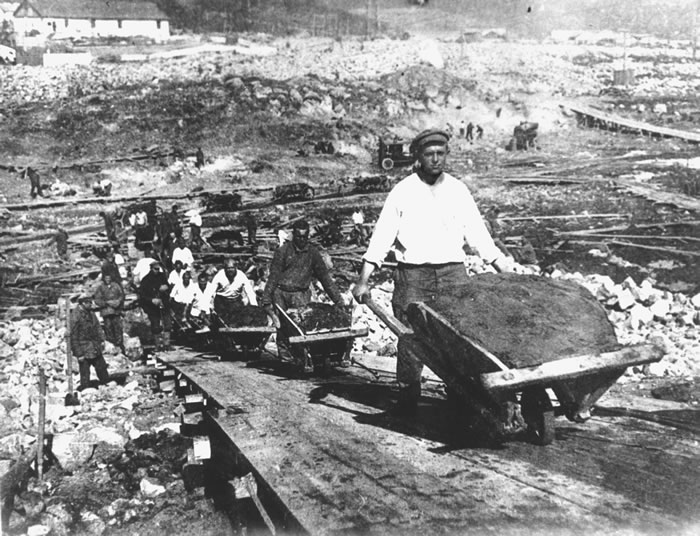
Alexander Solzhenitsyn effectively tells us the story of Stalin's mandatory labour camps, in which prisoners were welcomed with harsh conditions and endless sentences. Not a single person has tasted freedom upon the first day they entered the camp, not a single person has ever left. The book describes a single day of Ivan, a normal citizen who just so happened to be in the wrong place at the wrong time. Through Ivan's eyes, you learn the struggle of the people, the ' of the Soviet Gulag system, and the peril which occurred throughout Stalin's rule.
Although incomprehensible, Solzhenitsyn somehow manages to make you understand the struggle prisoners face, constantly struggling daily to maintain their sanity, hold their dignity, while laying low with the hope you might get out alive. Through this short tale, many questions relevant to the functions of Russia's systems are answered, as the informative pieces gives you greater understanding. I highly recommend the book, and although boring and long at times, the book has become a staple piece of literature that informs and reminds us of the boring, long, brutal yet important time of 1951.
Thursday, 12 March 2015
Favorite Poem
A Life-lesson
By James Whitcomb Riley
There! little girl; don't cry!
They have broken your doll, I know;
And your tea-set blue,
And your play-house, too,
Are things of the long ago;
But childish troubles will soon pass by. --
There! little girl; don't cry!
There! little girl; don't cry!
They have broken your slate, I know;
And the glad, wild ways
Of your schoolgirl days
Are things of the long ago;
But life and love will soon come by. --
There! little girl; don't cry!
There! little girl; don't cry!
They have broken your heart I know;
And the rainbow gleams
Of your youthful dreams
Are things of the long ago;
But Heaven holds all for which you sigh. --
There! little girl; don't cry!
I really enjoy this poem because it can be easily related to any girls' lives, from their childhood troubles to the wild ways of the teenage years, and finally when the girls reach their stage before womanhood where they are trying to find their true self and figuring what they are going to do when they grow up before going to college. The way Riley repeated 'There! little girl; don't cry!' almost seems like a chant, like he is trying to convince the girl not to cry instead of comforting her. I grew up with play-houses, tea sets and dolls and I have experienced ups and downs within friends and family and I am still trying to find out what career I should pursue in the near future, therefore I can relate really well to this poem.
Caged Bird By Maya Angelou
I Know Why The Caged Bird Sings
A free bird leaps
on the back of the wind
and floats downstream
till the current ends
and dips his wing
in the orange sun rays
and dares to claim the sky.
But a bird that stalks
down his narrow cage
can seldom see through
his bars of rage
his wings are clipped and
his feet are tied
so he opens his throat to sing.
The caged bird sings
with a fearful trill
of things unknown
but longed for still
and his tune is heard
on the distant hill
for the caged bird
sings of freedom.
The free bird thinks of another breeze
and the trade winds soft through the sighing trees
and the fat worms waiting on a dawn bright lawn
and he names the sky his own
But a caged bird stands on the grave of dreams
his shadow shouts on a nightmare scream
his wings are clipped and his feet are tied
so he opens his throat to sing.
The caged bird sings
with a fearful trill
of things unknown
but longed for still
and his tune is heard
on the distant hill
for the caged bird
sings of freedom.
"Diving Board" by Shel Silverstein

http://media-cache-ak1.pinimg.com/736x/a2/8b/49/a28b49521ac4d1b5c350e725428588c3.jpg
I really like this particular poem by Shel Silverstein, because it reflects on how people react when they are assigned with a task that is completely foreign to them, or just a really "professional procrastinator". It gives a visual image of a kid, overcome with anxiety, being extremely paranoid about hurting himself because of a dive into a pool, or just too lazy to finish up the activity. We can imagine him overdoing the preparations, but never approach the edge of the diving block because he is either wary of the outcome, or not bothered to tie the "wrapping bow" to this venture. Just like Mr Murphy said (or at least along the lines of what he said), "a task half done is not a task not done at all." Always achieve a goal that you've set out for yourself!
One Day In the life of Ivan Denisovich
 The story sets in a prison camp in 1951, telling the story of a day in the life of Ivan Denisovich. The story starts with him feeling sick in bed and got punishment because he woke up late. Afterwards, he rushes to breakfast with his gang and then to the nurse. However, the nurse told him that he is not sick and he has to go back to work. The day continues with his gang, 104 and him, working outside in the freezing, snowy day as they got assigned to the power station. In the evening, they lined up for roll call but a prison went missing and the gang headed back late. Ivan Denisovich gets a package for an inmate and gets extra meal for reward. Finally, he goes to bed and thinking that it was a good day. This story is insightful and informative. It tells an extraordinary day of a prisoner. I found this story kind of boring but overall, it was ok.
Subscribe to:
Posts (Atom)